

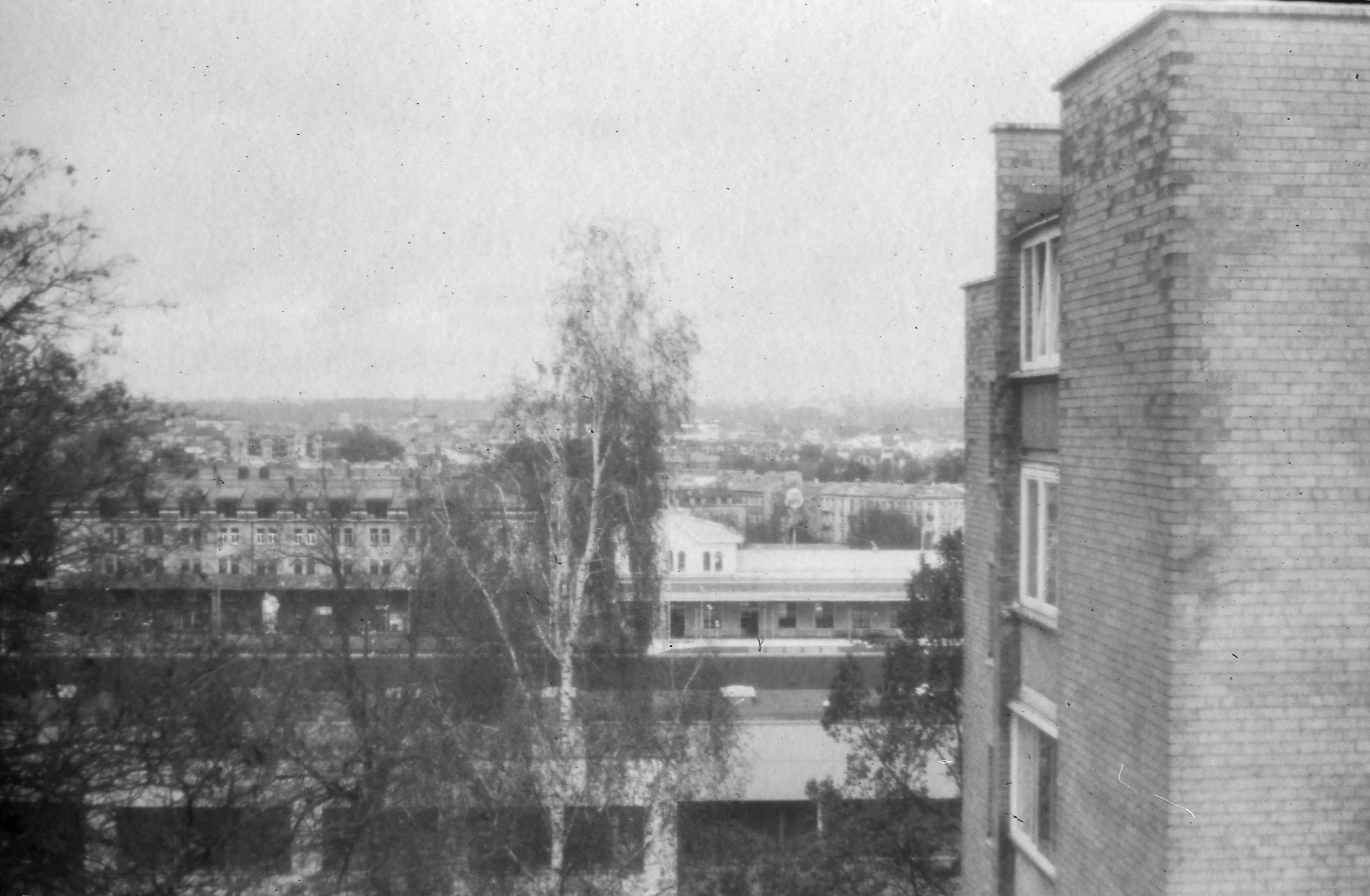
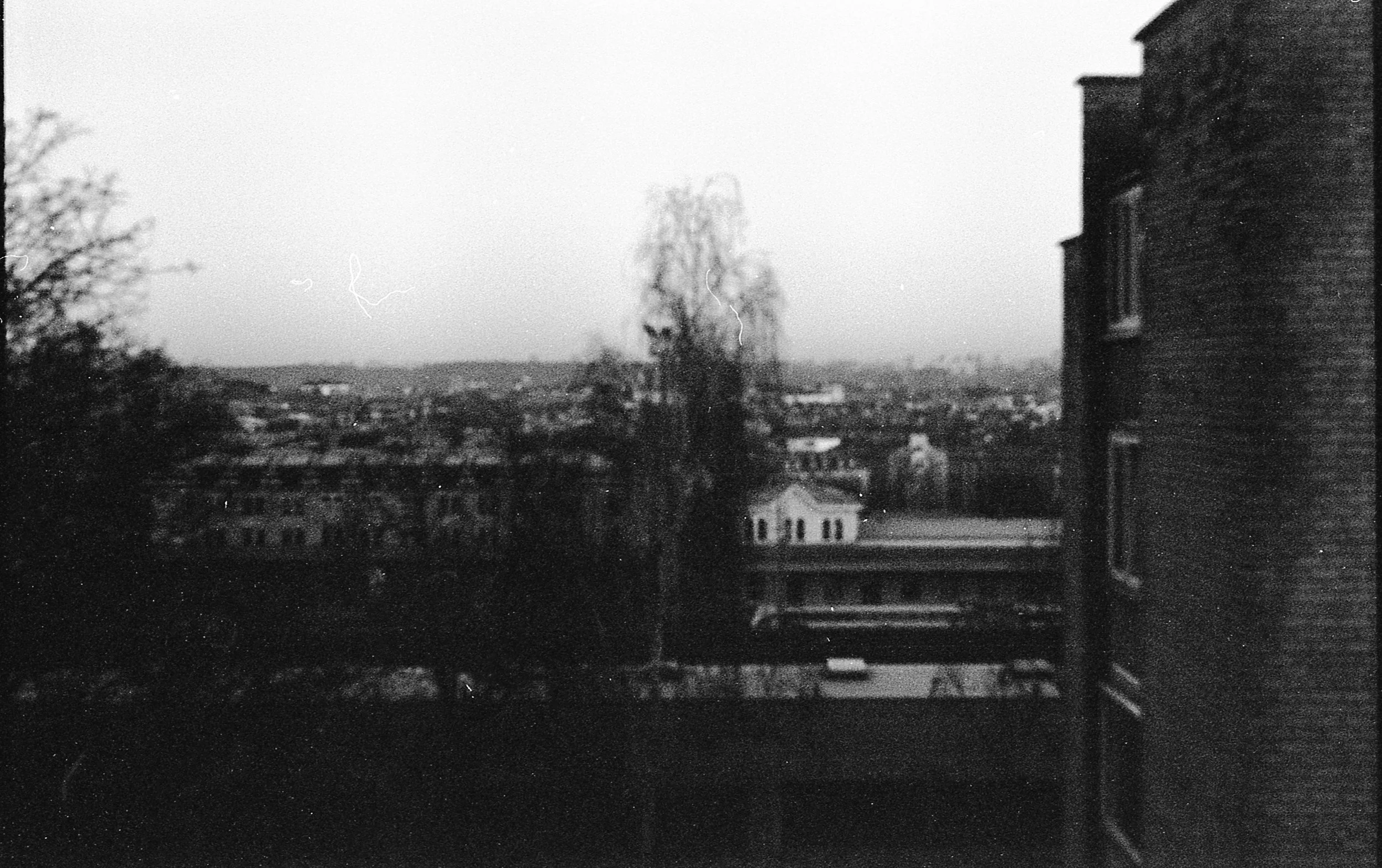
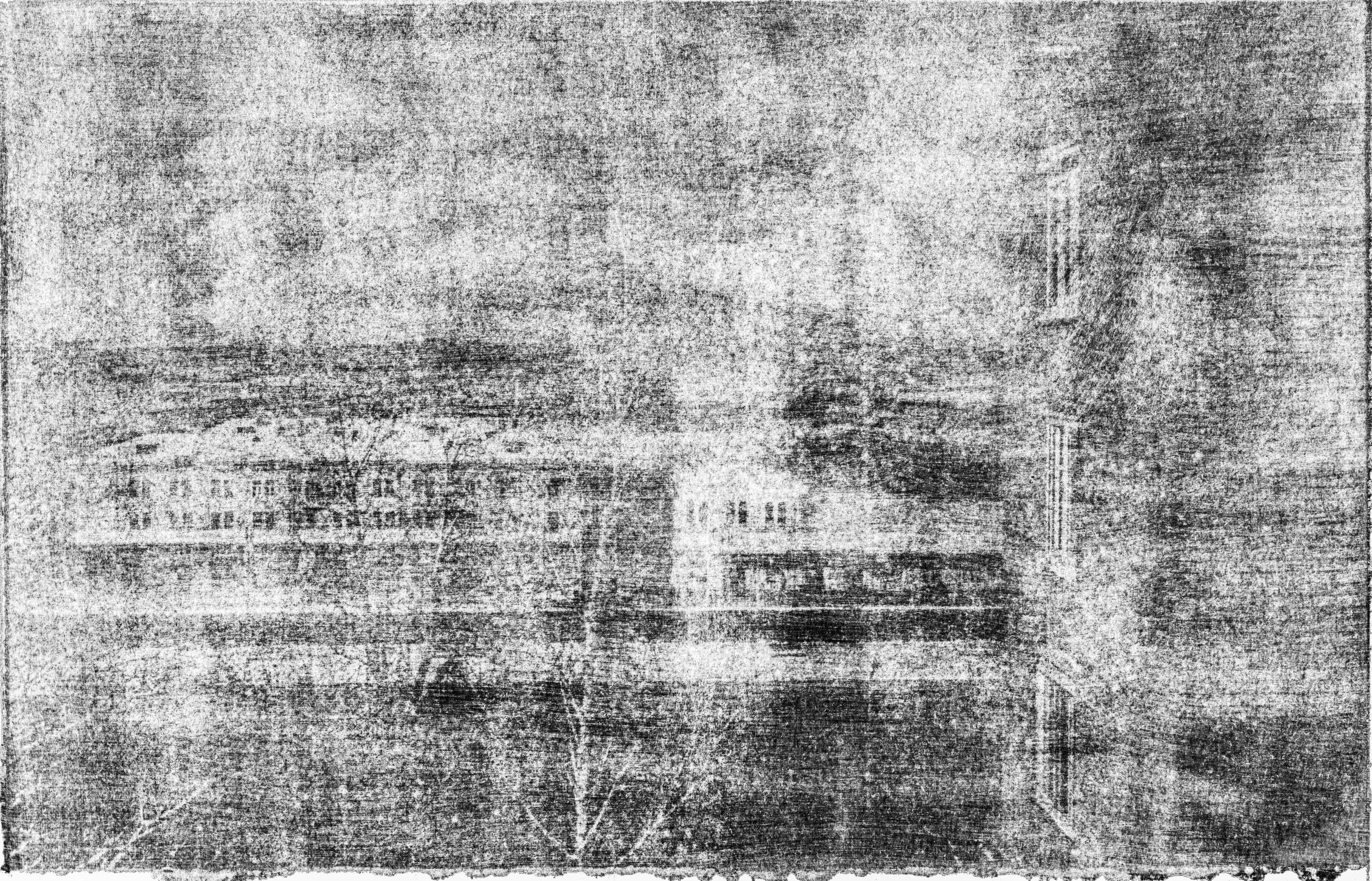
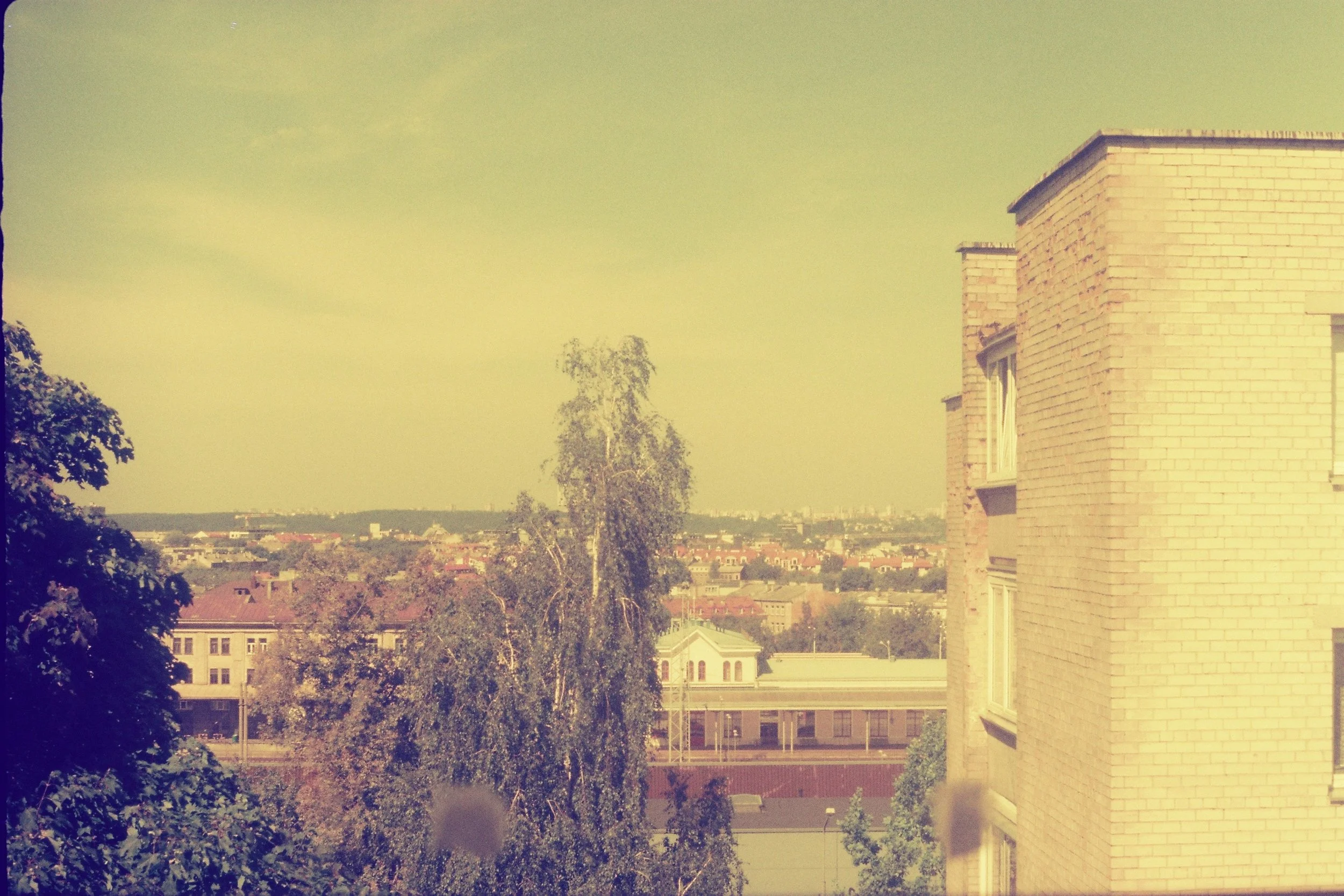
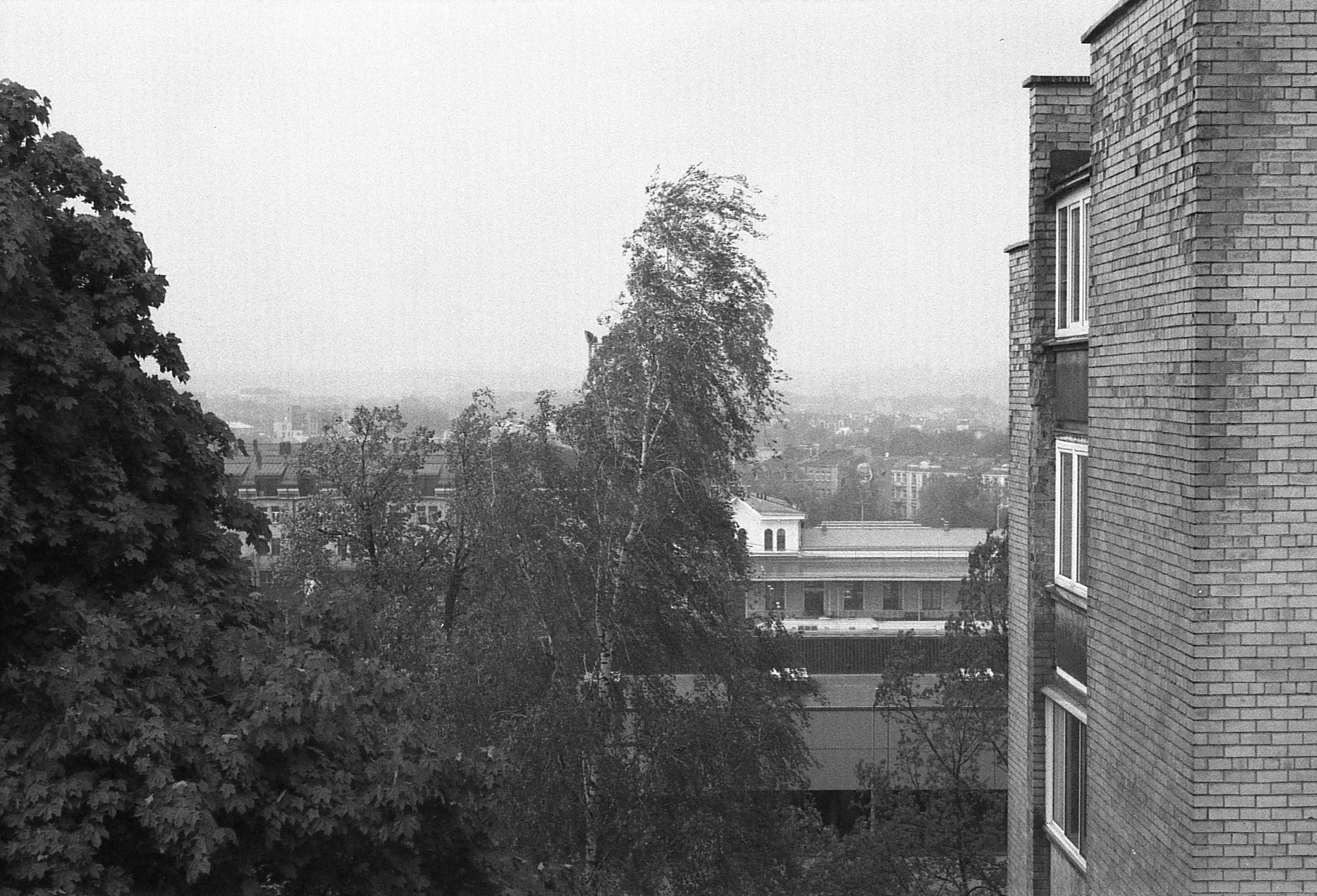
Travel North is a photographic series that began in 2017, when I came across a “special edition” of expired color film produced in the USSR to commemorate the 50th anniversary of the October Revolution. Manufactured in 1967, the film carried the chemical imprint of another era — its shifting tones and accumulated imperfections mirroring the instability and tension inherent in historic memory. The photographs themselves emerged from an ordinary and accidental gesture. From the window of my apartment near the Vilnius train station, I began repeatedly photographing the same view — a landscape I encountered every day without initially attaching any particular significance to it. The image became a kind of recurring notation: a familiar scene continuously altered by weather, light, mood, passing time, and the changing material conditions of the film. Over time, I worked with a variety of expired black and white and color films moving gradually from 1967 toward the present. What interested me in expired film was its unpredictability. The chemical changes accumulated over time introduced imperfections and variations that could not be fully controlled. I began to see a connection between this material instability and the instability of daily life — how ordinary experience is shaped by chance encounters, repetition, mood, and small unforeseen changes.











Previous
Previous